














Țîru uses cookies. By browsing this site, you agree to the use of cookies. Privacy Policy »

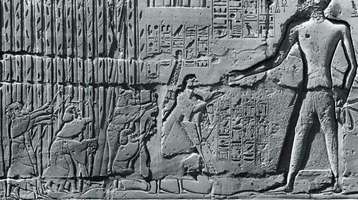
In 539 BCE, Babylon was conquered by Cyrus the Great, an event that marks the beginning of the Achaemenid (Persian) Empire. During the reign of Cyrus' son and successor Cambyses (r.530-522), the Persians conquered Egypt, which was only possible if they controlled the Mediterranean shores, which in turn necessitated the construction of a navy. Sidon and Byblos were to be the main ports. For two centuries, Byblos was an important center of Achaemenid power. A Persian fort, built around a Phoenician tower, is still visible.
Coinage and inscriptions were abundant at the time of Persian rule in Byblos, but the date of the reign of their kings did not appear on the coins making it difficult to trace the exact chronology of its kings. The first king having reigned in Byblos in the Persian era, since the conquest by Cyrus, was Shipitbaal III (around 500 BCE) implicating that there were two before him. King Yehawmilk (450 BCE), leaving behind him a famous inscription describing works done on the temple of Baalat Gebal. Significant coinage was struck under his rule. A suggestion has been made, based on the inscription of Yehawmilk that his grand father and his father reigned before him. There is a gap in the information as to whether who reigned after yehawmilk, the coinage after him show the names of four kings, Elpaal, Ozbaal, Addirmilk and Aynel, the exact chronology is not very well known, but a proposition was made as to classify them as they are here mentioned. It is suggested that the last king Aynel was permitted to reign under Alexander the Great. It was also proposed that a Urimilk was the be inserted between Addirmilk and Aynel, and Zakur between Ozbaal and Addirmilk.
The chonology would be Shipitbaal III (?), Urimilk II, Yeharbaal, Yehawmilk, Elpaal, Ozbaal, Addirmilk and Aynel.
The end of the Persian Empire came in 333, after the battle of Issus. The Macedonians of Alexander the Great conquered the Near East and Byblos was among the first towns to surrender. After the death of Alexander (in 323 BCE), the city was part of "Coele Syria", an area that was contested between the Macedonian successor states, the Seleucid and Ptolemaic Empires.