


Valentinian II: The Boy Emperor and the Comedy of Rome’s Beginning of the End (Western Empire)
Explore the life and reign of Valentinian II, the young emperor who rose to power as a child in a divided Roman Empire. From palace intrigue to religious conflict, this post uncovers the comedic yet tragic story of Rome’s last hope before its inevitable fall.

Valentinian II, the Boy Emperor: Rome’s Last Laugh and the Tragic Farce of Its Fall
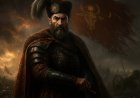
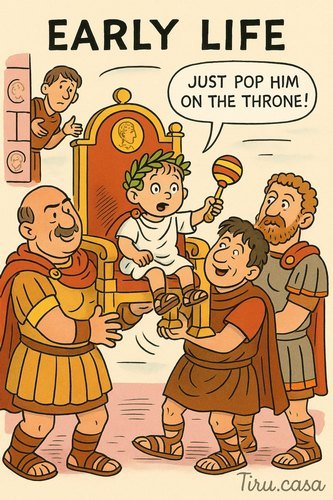
Today we meet Valentinian II (Latin: Valentinianus), Western Roman Emperor from 375–392 CE. Imagine being 4 years old and suddenly made boss of half the Roman world – that was Valentinian II! (His father Valentinian I died in 375, and the army proclaimed little Valentinian Augustus while his brother Gratian was busy elsewhere.)
He was born in 371 in Gaul and was crowned emperor as a toddler on 22 Nov 375. His older half-brother Gratian got Gaul, Britain and Spain, while Valentinian II – under the care of his mother, the Empress Justina – took charge of Italy, Illyricum (the Balkans) and Africa. Basically, the empire was carved up like a big cake: Gratian held the left slice, Valentinian the right, and the East went to Valens (until 378) and then Theodosius.
Co-Ruler of the West
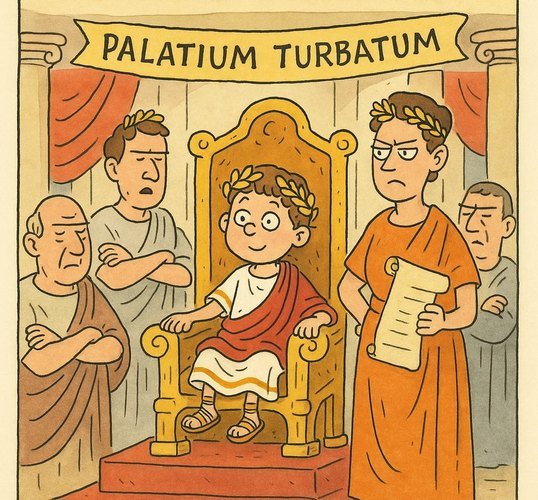
Throughout his youth Valentinian II was co-emperor alongside his stepbrother Gratian and, after 379, co-emperor with the East’s Theodosius I (who was Valentinian’s brother-in-law). Although he was Augustus, real power often rested with others. In Italy his mother Justina (an Arian Christian) effectively ruled as regent. Scenes at court were like episodes of a palace sitcom: the young emperor sat in regal robes while officials quietly ran things.
In 378 the eastern Emperor Valens was killed at Adrianople by Goths, so Gratian appointed the capable general Theodosius to handle the crisis in the East. Theodosius married Valentinian’s sister Galla and soon promised to restore Valentinian’s authority in the West. But before that happened, a new trouble brewed.
A famous quip from the time: on coins Valentinian is titled “DN VALENTINIANVS PF AVG” (Latin for “Dominus Noster Valentinianus Pius Felix Augustus”, “Our Lord Valentinian, the Pious and Fortunate Emperor”).
(Trivia: Pius Felix – “dutiful and lucky” – is a common imperial slogan.) Another coin legend reads “GLORIA ROMANORVM” (Glory of the Romans), a patriotic motto.
The Usurper Maximus
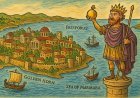
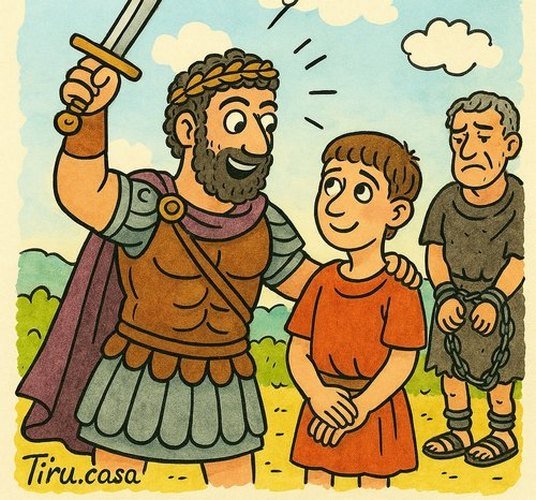
In 383 CE things got rough. The governor of Britain, Magnus Maximus, rebelled. He marched into Gaul, slew Emperor Gratian, and claimed the throne. Suddenly Valentinian II (only 12 years old) was technically the senior Augustus in the West – but with a usurper in control of Britain, Gaul and Spain. In 387 Maximus even invaded Italy! Emperor Valentinian and his mother Justina had to flee south. They escaped to Thessalonica, seeking help from Emperor Theodosius I in the East.
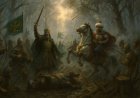
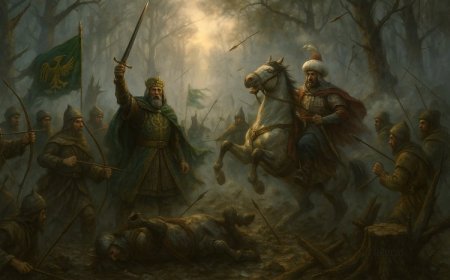
According to the historian Zosimus, Theodosius sat on his hands until he met Valentinian’s very attractive sister Galla – then he sprang into action. (Historians joke that Theodosius needed a “motivation” to act!) In spring 388 Theodosius defeated Maximus in a great battle and smashed the usurper’s army. Maximus was captured and executed, and Theodosius restored Valentinian II to power in the West.
Emperor Under Arbogast
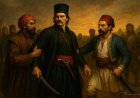
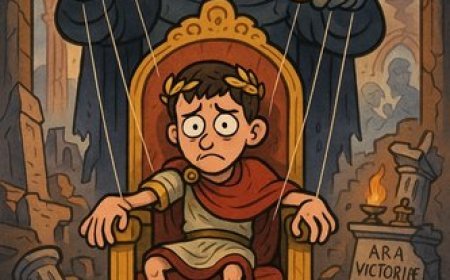
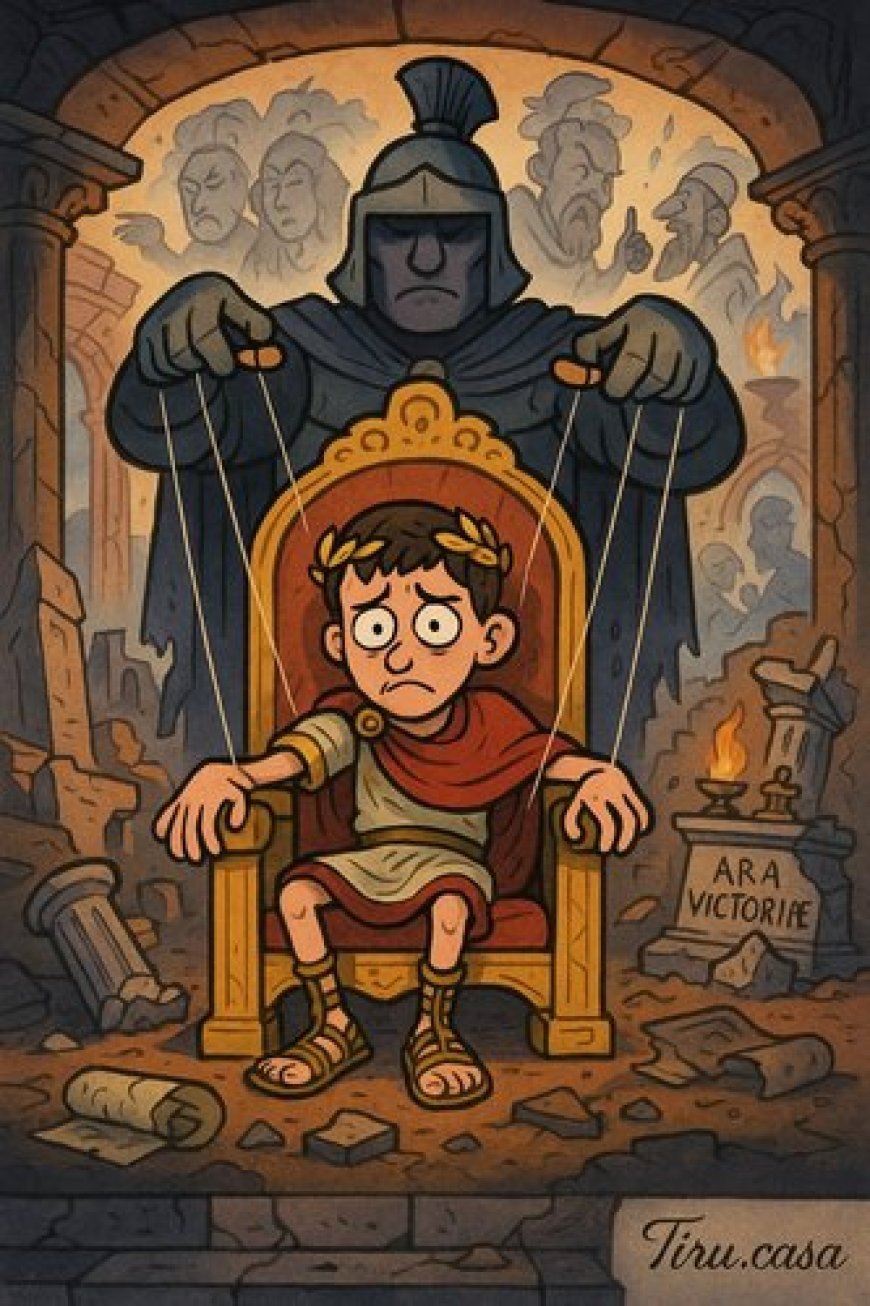
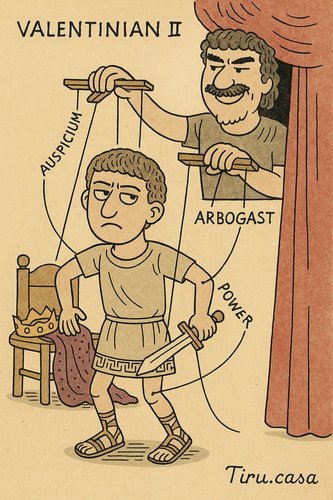
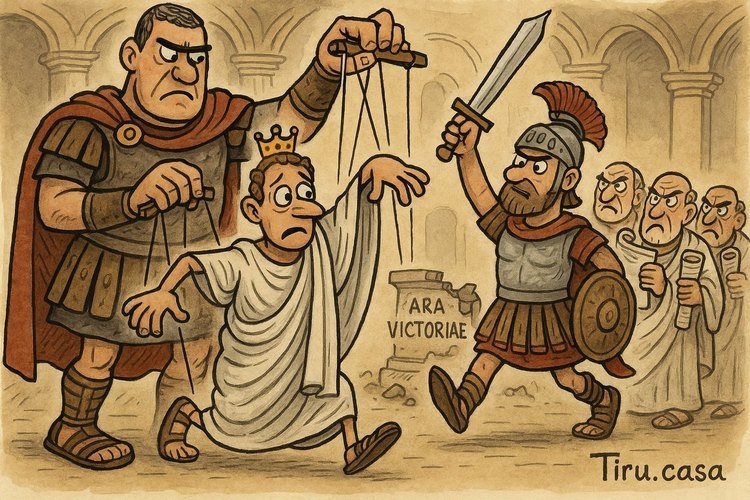
Valentinian II is now back in Italy (Milan and Vienne in Gaul), but the real power was in the hands of his army commander, Arbogast (a Frankish general). Think of Arbogast as a strict babysitter running the show behind the scenes. He never took the purple himself, but he ruled through Valentinian like a puppet. By 389–392 Valentinian grew frustrated. He disliked how Arbogast packed the court with his own supporters and called the shots. One day, Valentinian sacked Arbogast by letter – but Arbogast stomped off the notice and ignored it! When Valentinian tried to draw his sword at Arbogast in anger, guards pulled him back. The young emperor was powerless – like a kid ordering a parent around!
Religion: Arians vs Catholics
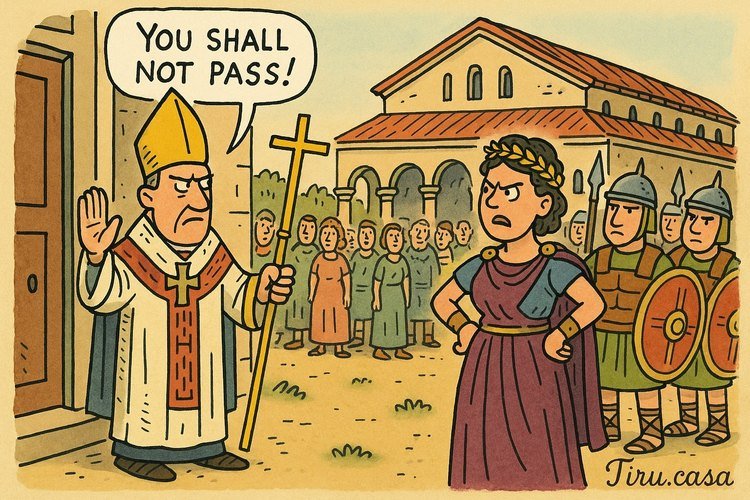
Religion was a big deal. Valentinian II and his mother Justina were Arian Christians (they believed the Father was more divine than the Son). But many Romans – including the powerful Bishop Ambrose of Milan – were orthodox (Nicene) Christians. In 386 the imperial court issued an edict favoring the Arians. Justina demanded that Ambrose hand over a Milan church for Arian services. Ambrose famously refused, reportedly telling her agents “I cannot do it”, because it was God’s church, not the emperor’s. The people even barricaded the church to keep it from the Arians. This led to a public clash: Valentinian (just a teenager) threatened Ambrose with punishment, but Ambrose stood firm. In the end, the standoff cooled without bloodshed. Ambrose’s firm stand made him a hero to many, and Valentinian’s Arian policies fizzled out.
The Mysterious Death of Valentinian II
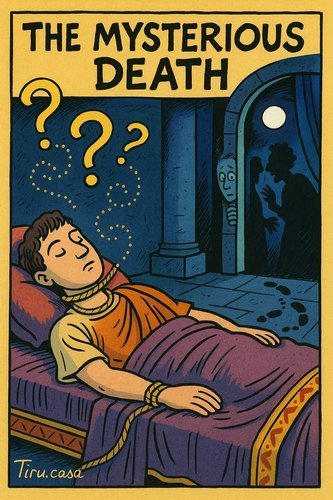
On May 15, 392, in his palace at Vienne (in Gaul), Emperor Valentinian II was found dead. Reports say he was hanging by a rope. The shocking discovery has baffled historians ever since. Was it suicide or murder?
Contemporary witnesses were split. Bishop Epiphanius (writing around 403) tersely noted Valentinian “was found suddenly suffocated in the palace” on the Ides of May. But other accounts hint at foul play. The Spanish historian Orosius (418 CE) wrote that Valentinian “was (as they say) strangled by the craft of his Count Arbogast, and hung by a rope that he might be thought to have contrived his own death”. In plain words: some said Arbogast had the emperor killed but staged it as suicide. Bishop Prosper of Aquitaine (c. 433) likewise reported Valentinian was “driven to weariness of life by the severity of Arbogast… perished by a rope at Vienne”.
Church fathers were cautious. St. Augustine (early 400s) simply wrote that Valentinian “soon after perished, whether by treachery or by some other means or chance (‘sive per insidias, sive quo alio pacto vel casu proxime exstincto’)”. So Augustine admitted the mystery. Later histories (Socrates, Sozomen) also give conflicting stories: Sozomen notes “some say [Valentinian] was put to death by the eunuchs at Arbogast’s bidding… Others assert he killed himself”.
In short, even today experts debate. As 19th-century historian Thomas Hodgkin summed up: “the death of Valentinian II was probably a murder, [but] the hypothesis of suicide is not altogether excluded by the evidence”. It’s a true historical whodunit!
Aftermath and Legacy
Valentinian II’s death changed everything. With him gone, Arbogast made a senator named Eugenius emperor as his puppet. This new regime (392–394) was seen as illegitimate. In 394 Emperor Theodosius marched west and defeated Eugenius and Arbogast at the Battle of the Frigidus. After that, Theodosius reunited the empire under one ruler (himself). The Valentinian dynasty of Valentinian I, Gratian, and Valentinian II was over.
Valentinian II never got the chance to rule Italy on his own. But his reign is remembered for palace drama, religious stand-offs, and a mystery that puzzles historians.
One epilogue: During his reign the Roman Senate made one last pagan plea. The senators sent another deputation to Valentinian II asking him to restore the old Altar of Victory in Rome’s Senate House (his father had removed it). Valentinian, being Christian (and under Theodosius’s influence), never reinstalled it. (Soon after, Theodosius permanently closed down all pagan temples.)
- Valentinian II was only four years old when he became emperor – probably one of the youngest emperors ever! Later he shared the throne with six other emperors at various times (Valens, Gratian, Theodosius, Arcadius, Magnus Maximus, Victorious, Eugenius).
- The “P.F.” in his coin title DN VALENTINIANVS P.F. AVG stands for Pius Felix – “dutiful and lucky”.
- A modern quip: If Valentinian II had a social media profile, it might have read “Valentinian II – Emperor (working remotely)”. (He spent much of his reign in Gaul, leaving Italy to generals!)
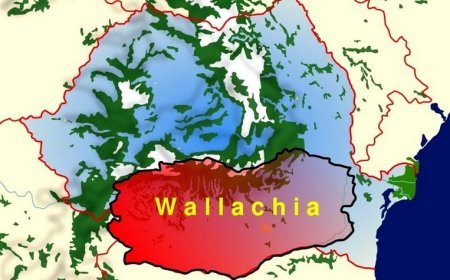
Connections to Dacia (Modern Romania)
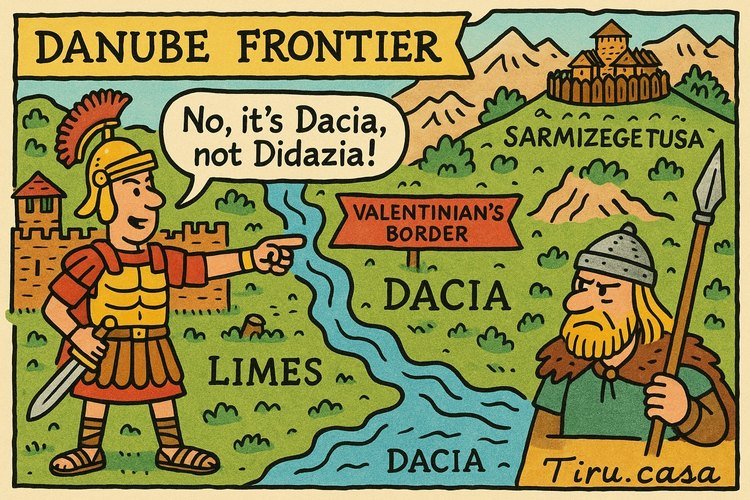
You might wonder: did Valentinian II have anything to do with Dacia (modern Romania)? By his time, classical Dacia (Traiana) had been lost to Goths for over a century. Aurelian carved new provinces north of the Danube called Dacia Ripensis/Mediterranea, but the true Dacian heartland was outside the empire.
Yet the Danubian frontier was still crucial. Archaeologists note that in the Middle Danube region (today’s Croatia/Serbia) Roman military sites and coins appear up until about Valentinian II’s reign (late 4th century) – but not much later. This implies the limes (border defenses) held on through his time but faded thereafter. Modern historians debate how “Roman” Dacia really was then. For example, Romanian scholar Alexandru Madgearu argues that after Constantine’s era the Dacian mines offered little profit, while Ion Grumeza points out that “gold, silver, salt, and other Dacian commodities were again flowing into the empire” in earlier times. Valentinian II himself never marched into Dacia, but as a Western Emperor he oversaw emperors who handled Gothic tribes north of the Danube (via treaties like that of 332 CE). In short: Dacia lay beyond his direct reach, but the very term “Dacia” and the Danubian border were still on Rome’s mind even in Valentinian’s day.
Timeline of Key Events
- 371 CE ➳ Valentinian II is born in Treveri (modern Trier, Germany) to Emperor Valentinian I and Justina.
- 375 CE ➳ Nov 22: Valentinian I dies in Pannonia; Generals lift 4-year-old Valentinian II onto a shield and proclaim him Emperor. Gratian becomes senior Augustus, Valentinian gets Italy & Illyricum.
- 376–379 CE ➳ Valentinian II (with Gratian) rules West; Uncle Valens governs East. Valentinian is still under regency of his mother Justina.
- 378 CE ➳ Battle of Adrianople: Emperor Valens (East) is killed by Goths. Gratian elevates Theodosius as Eastern Emperor.
- 383 CE ➳ Magnus Maximus rebels. He defeats and kills Gratian. Valentinian II becomes sole Western emperor in name, but only 12 years old and overshadowed by Maximus.
- 386 CE ➳ Imperial edict favors Arian Christians; conflict with Bishop Ambrose in Milan. Valentinian’s mother pressures for an Arian church; Ambrose resists.
- 387 CE ➳ Maximus invades Italy. Valentinian II and Justina flee to Thessalonica and beseech Theodosius for help (legend says Theodosius only agrees after meeting Valentinian’s sister Galla).
- 388 CE ➳ Theodosius defeats Maximus (Battle of Aquileia) and restores Valentinian II as Western Emperor. Empress Justina dies soon after.
- 389–391 CE ➳ Valentinian II rules (in name) from Milan/Vienne under the influence of General Arbogast. Emperor Theodosius is sole ruler in East; both meet in Milan (389).
- 392 CE ➳ Early May: Valentinian fires Arbogast by letter, but Arbogast ignores it. May 15: Valentinian II is found dead at Vienne (mysterious hanging). Arbogast proclaims Eugenius emperor.
- 394 CE ➳ Battle of the Frigidus: Emperor Theodosius defeats Eugenius and Arbogast, ending the revolt. Afterward, Theodosius rules the whole empire (Western branch of Valentinian line ends).
Trivia & Questions
Glossary
- Augustus: Title meaning “Emperor”. Roman rulers used Augustus as a title of high rank. (e.g. Valentinian II’s full title was Imperator Caesar Flavius Valentinianus Augustus.)
- Arianism: A Christian belief (named for Arius) that Jesus the Son is not equal to God the Father in divinity. Opposed by Nicene (orthodox) Christians. Justina and Valentinian II favored Arians; Ambrose was Nicene.
- Basilica: In this context, a large church building. Ambrose’s famous basilica in Milan was at the center of the Arian conflict.
- Emperor (Imperator): The ruler of the Roman Empire. There were often several Augusti (emperors) ruling different parts (East/West) or jointly.
- Magister Militum: Latin for “Master of Soldiers,” the top general. Arbogast was magister militum of the West under Valentinian II.
- Praetorian Prefect: A high official (former head of the Praetorian Guard) who often governed large regions. For example, the historian Ammianus was once a tribune under Petronius Probus, a praetorian prefect.
- Reign: The period during which a ruler (emperor) is on the throne. Valentinian II’s reign was 375–392.
- Roman Emperor: The sole ruler (later co-rulers) of the Roman Empire after Augustus. By Valentinian’s time the Empire was often split between East and West emperors.
- Senate (SPQR): The Roman Senate (Senatus Populusque Romanus – The Senate and People of Rome) continued as an advisory council. Senators often had senatorial deputies for issues like the Altar of Victory.
- Usurper: A rebel who seizes power without legal claim (like Magnus Maximus or Eugenius). Valentinian II was once protected by defeating the usurper Maximus.
📚 Sources & Research Note
In preparing this illustrated guide to Valentinian II, I consulted both ancient sources and modern historical research. Writers such as Ammianus Marcellinus, Zosimus, and Sozomen provide contemporary or near-contemporary accounts of the late Roman world, including the young emperor’s turbulent reign. Church historians like Socrates Scholasticus, Theodoret, and Epiphanius offer further insights, particularly into the religious and political tensions of the era.
For broader context and fact-checking, I turned to modern references including Livius.org, the Encyclopædia Britannica, and scholarly platforms such as penelope.uchicago.edu and academia.edu. These helped clarify key events — such as the mysterious death of Valentinian in 392 CE — and shed light on ongoing debates about his autonomy and influence.
To deepen the narrative, I also drew on respected overviews of Zosimus’ New History and Ammianus’ Res Gestae. Even numismatic details, like the meaning behind the coin inscription DN VALENTINIANVS P.F. AVG, were verified using specialized resources such as wildwinds.com, as well as from coins preserved in my family’s private collection — part of the Țîru family's long-standing passion for ancient numismatics and history, cultivated over many years.
This blend of primary texts, modern interpretation, and firsthand materials helped shape a more complete and nuanced perspective.
Citations:
- Valentinian II - Wikipedia
- On this day in AD392 the Roman emperor Valentinian II was found dead in Vienna - Mint Imperials
- Valentinian II - Livius
- Valentinian II, Roman Imperial Coins of - WildWinds
- Zosimus, New History 4 - Livius
- Italy and Her Invaders • Book I: Note F
- CHURCH FATHERS: Ecclesiastical History, Book VII (Sozomen)
- Frontiers of the Roman Empire - The Danube Limes (Croatia) - UNESCO World Heritage Centre
- The Reconquest of Dacia by Constantine the Great - Academia.edu
- Edward Gibbon: History of the Decline and Fall of the Roman Empire - Christian Classics Ethereal Library
- Zosimus, New History 4.24 - Livius

What's Your Reaction?
 Like
0
Like
0
 Dislike
0
Dislike
0
 Love
0
Love
0
 Funny
0
Funny
0
 Angry
0
Angry
0
 Sad
0
Sad
0
 Wow
0
Wow
0